Car accident injury claims in Pierce County are legal actions that allow crash victims to seek compensation for medical bills, lost wages, and pain and suffering under Washington state law. What you do in the hours and days after a crash can determine whether you recover fair compensation or walk away with almost nothing.
This guide focuses specifically on the post-crash mistakes Pierce County drivers make that directly damage their personal injury claims before an attorney ever gets involved.
The most common mistake we see is also the most costly: drivers think the crash was minor and handle everything themselves. Then weeks later, they discover their injuries are serious and the insurance company has already locked them into a low settlement. That pattern plays out constantly on roads throughout Tacoma, Puyallup, Lakewood, and the surrounding communities Pierce County drivers travel every day.
Many crash victims who accept early settlements later find that the payout did not cover their total medical costs. The decisions you make right after impact matter more than most people realize.
Mistake One: Saying “I’m Fine” at the Scene
It feels natural. You’re rattled, adrenaline is flooding your system, and you want to reassure everyone around you. But telling the other driver, a bystander, or even a responding officer that you feel fine creates a record that insurers will use against you.
Soft tissue injuries, concussions, and spinal damage often don’t produce pain until 24 to 72 hours after impact. What feels like minor stiffness at the scene can turn into weeks of physical therapy. Once you’ve said you’re unhurt, that statement follows your claim through every negotiation.
What to say instead: “I’m not sure how I feel yet. I’d like to get checked out by a doctor.” That’s honest, accurate, and it protects you.
Mistake Two: Skipping the Doctor or Waiting Too Long
Delayed medical care is one of the top reasons Washington injury claims lose value. Insurers treat a gap between the crash date and your first medical visit as evidence that your injuries weren’t serious.
Under Washington law (RCW 4.16.080), you have three years from the date of a car accident to file a personal injury lawsuit. But waiting even a few days to see a doctor can create a gap in your medical record that an insurer’s adjuster will flag immediately. That gap becomes their argument that something else caused your injuries.
See a doctor within 24 hours of any crash, even one that seems minor. Get every symptom documented. If your regular physician can’t see you that day, go to an urgent care clinic. The visit creates a medical record tied directly to the crash date.
Thinking about how this applies to your situation? Contact us at Terry Law Firm, P.S. and we’ll walk you through your options with no pressure.
Mistake Three: Talking to the Other Driver’s Insurance Company Without Guidance
This one surprises people. The other driver’s insurance company calls, sounds friendly and sympathetic, and asks you to give a recorded statement. Many Pierce County drivers comply because they want to cooperate and move things along.
Recorded statements to the opposing insurer: These are not casual conversations. They are evidence-gathering exercises designed to find inconsistencies or admissions that reduce your payout.
You are not legally required to give a recorded statement to the other driver’s insurer. You are required to cooperate with your own insurer, but even then, an attorney can help you understand what that cooperation requires and what it doesn’t.
Common things adjusters ask that hurt claims:
- “On a scale of one to ten, how much pain are you in?” (Any number anchors your damages early)
- “Were you in any previous accidents?” (Designed to shift blame to prior injuries)
- “What were you doing right before the crash?” (Looking for comparative fault)
Washington follows a pure comparative fault rule. If an adjuster can assign you even 20% of the blame, your recovery drops by 20%. Their job is to find that percentage. A recorded statement is their best tool.
Handling the Insurance Side vs. Handling It Alone: Which Approach Works?
Where handling your own claim succeeds: Minor property-damage-only accidents with no injuries, where the at-fault driver’s liability is clear and the payout is straightforward.
Where handling your own claim fails: Any crash involving bodily injury, disputed liability, multiple vehicles, commercial drivers, or uninsured motorists. Insurers have professional adjusters whose job is to minimize payouts. Most individuals negotiate these situations without knowing what their claim is actually worth.
Where working with an attorney succeeds: Documented injuries, disputed fault, significant medical bills, lost wages, and cases involving rideshare or commercial vehicles where multiple insurance policies apply.
Where working with an attorney fails: Very minor fender-benders with zero injury and clear liability where the small payout doesn’t justify the time investment.
The verdict: If you have any physical injury, work with someone who knows Washington’s liability framework before you sign anything or give any statement. The cost of professional guidance is almost always less than the cost of a reduced settlement.
See how our approach at Terry Law Firm, P.S. compares to going it alone – visit our services page for a complete overview of how we help Pierce County injury victims.
Mistake Four: Posting About the Accident on Social Media
Insurance adjusters routinely monitor social media as part of claim investigations, and posts made after a crash are regularly used to challenge injury claims.
A photo of you at a family barbecue two weeks after your crash, even if you’re quietly sitting in a chair and managing pain, can be framed as proof you’re not as injured as you claim. A comment saying “Doing better, thanks for asking!” becomes an exhibit in settlement negotiations.
The safest approach after any serious accident:
- Set all accounts to private immediately and avoid accepting new connection requests from people you don’t recognize
- Don’t post about the accident, your injuries, or your recovery until your claim is fully resolved
- Tell family members not to tag you in photos or post anything that shows your physical activity level
- Screenshot and preserve your own posts from before the accident if they establish your normal activity level prior to the crash
Mistake Five: Signing a Release Too Early
Early settlement releases in Washington injury cases: Documents offered by insurers shortly after a crash that close your claim permanently in exchange for a quick check.
This is perhaps the most financially damaging mistake on this list. Insurers sometimes offer fast settlements because they know the full extent of your injuries isn’t clear yet. Once you sign a release, you cannot go back and ask for more money even if your medical situation turns out to be far more serious than you thought.
Soft tissue injuries can require months of treatment. Traumatic brain injuries sometimes aren’t properly diagnosed for weeks. Spinal issues can worsen over time. A release signed before you’ve reached what doctors call “maximum medical improvement” locks in a number that may cover only a fraction of your actual losses.
According to Washington State courts guidance, releases are binding contracts. Courts rarely set them aside unless there is proof of fraud or extreme duress. Don’t sign anything until you know the full picture of your recovery.
Your Post-Crash Action Plan
- Step 1 – Seek medical care within 24 hours: Get every symptom documented, creating a medical record tied directly to the crash date and protecting your claim timeline.
- Step 2 – Document everything at the scene: Photographs of all vehicles, road conditions, skid marks, and visible injuries before anything is moved or cleared.
- Step 3 – Get the police report: Request the report number at the scene and obtain a copy as soon as it is available from the Pierce County Sheriff or relevant Tacoma PD report center.
- Step 4 – Notify your own insurer promptly: Report the accident to your own insurance company, but do not give a recorded statement to the other driver’s insurer without guidance.
- Step 5 – Lock down social media: Set accounts to private and avoid all posts related to your accident or physical condition until your claim is resolved.
- Step 6 – Preserve all records: Keep every medical bill, prescription receipt, mileage log for medical visits, and any documentation of missed work in one organized file.
- Step 7 – Get legal guidance before signing anything: A release is permanent. Don’t sign until you understand the full scope of your injuries and losses.
What Pierce County Drivers Should Know About Washington Crash Law
Washington’s pure comparative fault rule means your compensation is reduced by your percentage of fault. This is different from Oregon, which uses a modified comparative fault system that bars recovery if you’re more than 50% at fault, and Idaho, which uses a similar 50% bar. Washington’s rule is more permissive for injured parties, but it also gives insurers more room to chip away at your recovery by assigning partial blame.
| State | Fault System | Statute of Limitations | Key Note |
|---|---|---|---|
| Washington | Pure Comparative Fault | 3 years (personal injury) | Recovery reduced by your % of fault, never barred |
| Oregon | Modified Comparative (51% bar) | 2 years | No recovery if you’re 51% or more at fault |
| Idaho | Modified Comparative (50% bar) | 2 years | No recovery if you’re 50% or more at fault |
Washington’s three-year window gives you more time than neighboring states, but that doesn’t mean you should wait. Evidence disappears, witnesses move, and medical records become harder to connect to the crash date as time passes.
Frequently Asked Questions
How long do I have to file a car accident injury claim in Pierce County?
Washington gives most personal injury victims three years from the date of the crash to file a lawsuit under RCW 4.16.080. Missing this deadline typically means losing your right to recover compensation entirely, regardless of how strong your case is.
Do I have to give a recorded statement to the other driver’s insurance company?
No, you are not legally required to give a recorded statement to the opposing insurer in Washington. Adjusters are trained to ask questions that reduce claim value, and anything you say in that recording can be used against you.
What if the other driver was uninsured?
Washington requires insurers to offer uninsured motorist coverage, which protects you when the at-fault driver has no insurance. Check your own policy for UM/UIM coverage limits and report the accident to your insurer promptly.
Can I still recover damages if I was partly at fault for the crash?
Yes, under Washington’s pure comparative fault rule, you can recover damages even if you were partially at fault. Your compensation is simply reduced by your percentage of fault, so a 20% fault finding on a $100,000 claim results in an $80,000 recovery.
How much does a personal injury attorney typically cost for a car accident case?
Most personal injury attorneys in Washington work on a contingency fee basis, meaning they collect a percentage of your settlement only if you win. Industry-standard contingency fees generally range from 33% to 40% depending on case complexity, and there is typically no upfront cost to the client.
What documents should I gather after a Pierce County car accident?
The most critical documents are the police report, all medical records and bills, photos from the scene, insurance correspondence, and any record of missed work or lost income. Keeping these in one place from day one makes a significant difference in how smoothly your claim moves forward.
Key Takeaways for Pierce County Drivers in 2026
- Silence protects you at the scene – saying “I’m fine” is a statement that gets used against your claim
- Medical care within 24 hours is non-negotiable – gaps in your treatment timeline hurt your case more than almost anything else
- Recorded statements are not neutral – the opposing insurer’s adjuster is not on your side
- Social media is monitored – one photo or comment can undercut months of legitimate medical treatment
- Releases are permanent – never sign one before you know the full extent of your injuries
What This Means for You Right Now
If you or someone in your family was recently in a crash anywhere in Pierce County – whether in Tacoma, Puyallup, Bonney Lake, Sumner, Lakewood, University Place, or the surrounding communities – the steps you take in the next few days are the ones that shape your entire claim.
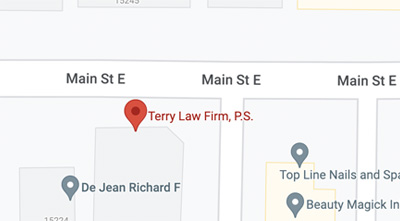
The team at Terry Law Firm, P.S., based in Sumner, WA, works with injury victims throughout Pierce County and wants you to have clear, straight answers before you make any decisions. You shouldn’t have to figure out Washington’s liability rules on your own while you’re also dealing with pain, missed work, and a damaged vehicle.
Ready to get real answers about your situation? Contact us today and let’s talk through exactly where you stand. Don’t sign anything, don’t give any recorded statements, and don’t settle until you understand what your claim is actually worth.
This content is for general informational purposes only and does not constitute legal advice. Reading this article does not create an attorney-client relationship. For advice specific to your situation, please consult a licensed Washington state attorney.