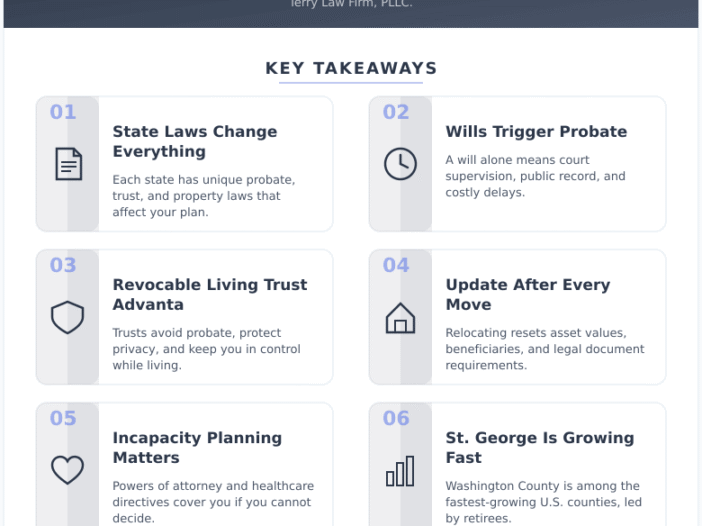
St. George, Utah is one of the fastest-growing retirement destinations in the country, drawing thousands of new residents every year from California, Nevada, and beyond. But most people arrive with estate planning documents written under another state’s laws – and that gap can create real problems for their families. A will drafted in California doesn’t automatically align with Utah’s probate code, and a trust that hasn’t been funded with new Utah real estate is essentially useless. This piece walks through why a move triggers an estate planning review, the key differences between wills and revocable living trusts under Utah law, the most common mistakes retirees make, and a clear action plan for getting documents updated quickly. For St. George residents in 2025, getting this right now means avoiding court costs, delays, and family conflict later.
Estate Planning and Personal Injury Law
What Happens to Your Washington Home If You Die Without a Will? (It’s Not What You Think)
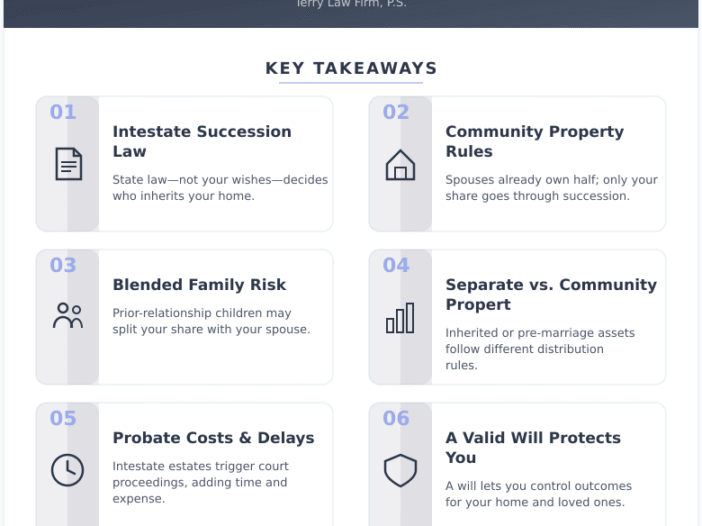
Most Washington homeowners assume their spouse will automatically inherit the family home if they die without a will. The reality under Washington’s intestate succession laws is more complicated – especially for blended families, unmarried partners, and anyone who owns separate property acquired before marriage. Community property rules mean a surviving spouse may inherit only a fraction of the home, with the rest passing to children from prior relationships. Probate in these cases routinely takes 6 to 18 months and can consume a meaningful portion of the estate’s value. A basic will, a revocable living trust, or a community property agreement can prevent these outcomes – but only if the planning is done before it’s needed. This piece breaks down how Washington intestate law actually works, where the biggest risks are for real families in 2026, and what steps homeowners can take now to keep the decision-making where it belongs: with them.
Will vs. Trust in Utah – Which One Actually Keeps Your Family Out of Probate Court in Washington County
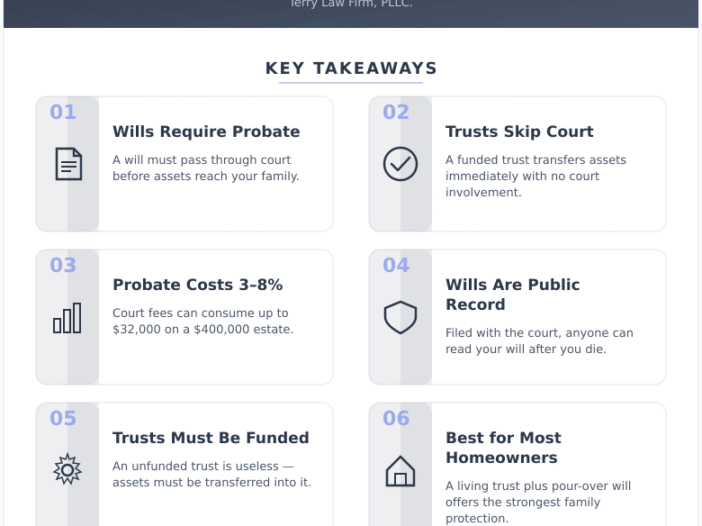
Choosing between a will and a trust is one of the most important estate planning decisions Utah families face, and the difference matters enormously for Washington County residents. A will does not avoid probate – it virtually guarantees involvement with the Fifth District Court in St. George, potentially consuming 3% to 8% of an estate’s value in costs and stretching the process over months or years. A properly funded revocable living trust, by contrast, transfers assets directly to beneficiaries without court involvement, keeps your affairs private, and gives your family immediate access to what you intended for them. This breakdown covers Utah-specific probate rules, a full side-by-side comparison of wills and trusts, a step-by-step planning checklist, and the most common mistakes Washington County families make when setting up an estate plan.
Motorcycle Season on Highway 410: Why Washington’s Helmet Law Isn’t Your Biggest Legal Risk
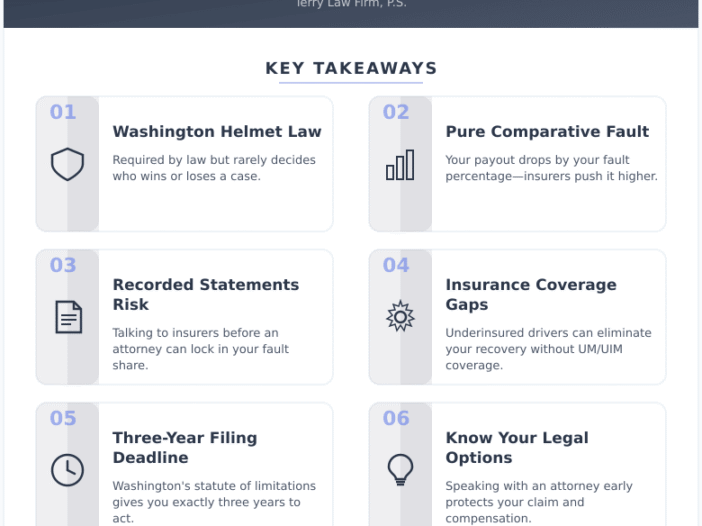
Motorcycle riders on Washington’s Highway 410 face far more complex legal risks than helmet compliance alone. Washington’s pure comparative fault system, insurance coverage gaps, and a compressed evidence window after a crash create real financial exposure that most riders don’t anticipate. Helmet non-compliance can reduce head-injury damages under comparative fault principles, but it doesn’t touch the broader recovery for other injuries. The bigger threats are underinsured drivers, recorded statements given too early, and fault percentages that insurers push higher during negotiations. Carrying uninsured and underinsured motorist coverage is the most underused protection available to Washington riders. Acting quickly after a crash on a mountain corridor preserves critical evidence before it disappears. Understanding Washington’s three-year statute of limitations under RCW 4.16.080 matters, but waiting rarely helps.
Special Needs Trust in Utah – How St. George Families Protect a Disabled Child’s Benefits Without Disqualifying Them from Medicaid and SSI

Families in St. George and Washington County, Utah face a serious planning risk: leaving money directly to a disabled child can immediately eliminate their Medicaid or SSI benefits. A properly drafted special needs trust solves this by holding assets outside the reach of federal benefit program calculations, letting families provide real financial support without triggering disqualification. The type of trust matters – third-party special needs trusts, funded by parents or grandparents, carry no Medicaid payback requirement at death, making them the preferred choice for proactive estate planning. Trust language, trustee selection, and coordination with life insurance and existing estate documents all affect whether the plan holds up. Terry Law Firm, PLLC., a member of the American Academy of Estate Planning Attorneys, helps families throughout Southern Utah build estate plans that protect their most vulnerable loved ones.
The ‘Sandwich Generation’ Guide: Protecting Your Parents’ Assets Before a Nursing Home Wipes Them Out
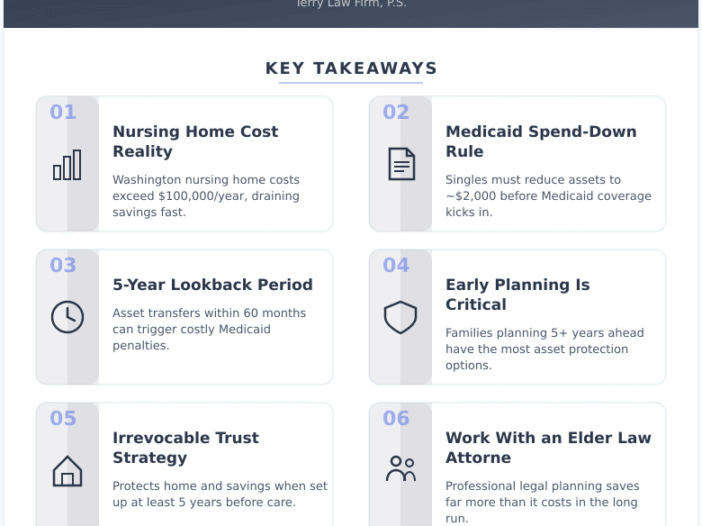
Nursing home costs in Washington can exceed $120,000 per year, and without a legal plan, a lifetime of savings can disappear before Medicaid coverage kicks in. For families balancing their own households while caring for aging parents, the five-year Medicaid lookback window is the most important deadline most people have never heard of. This guide breaks down how Washington Medicaid rules work, which assets are exempt, how estate recovery can affect the family home, and what legal tools – like irrevocable trusts, spousal protection planning, and Medicaid-compliant annuities – actually do. Early planning consistently costs far less than spend-down, and the strategies available narrow sharply once a parent is already in care.