In 2025, technology isn’t just changing how cars drive or how we communicate—it’s also changing how personal injury cases are valued and resolved. One of the biggest shifts is the rise of predictive analytics in settlement negotiations. Insurance companies are using data-driven tools to forecast what a case is “worth” and decide how much to […]
Blog
Virtual Consultations in Injury Law: Convenience vs. Legal Risks
Over the past few years, virtual consultations have gone from novelty to normal. In 2025, many people in Washington meet with doctors online, sign real estate contracts remotely, and even attend court hearings via video. Personal injury law has embraced the trend too. Meeting your lawyer from the comfort of your living room can feel […]
Cross-Jurisdiction Injury Claims: Staying Prepared for State Differences
Getting injured is stressful enough. But when your accident happens in one state and your life is rooted in another, the situation becomes even more complicated. Cross-jurisdiction injury claims—cases that involve more than one state—are becoming increasingly common in 2025. With more travel, remote work, and interstate commerce than ever before, these cases are reshaping […]
Non-Economic Damage Caps: What You Should Know for Your Injury Case
When you think of a personal injury case, you probably picture compensation for hospital bills, lost wages, or physical therapy. Those are called economic damages—they cover the financial costs of an injury. But there’s another side: non-economic damages. These include pain, suffering, emotional distress, loss of companionship, and the everyday challenges that don’t come with […]
Why LGBTQ+ Couples in Washington Still Need an Estate Plan – Even After Marriage Equality
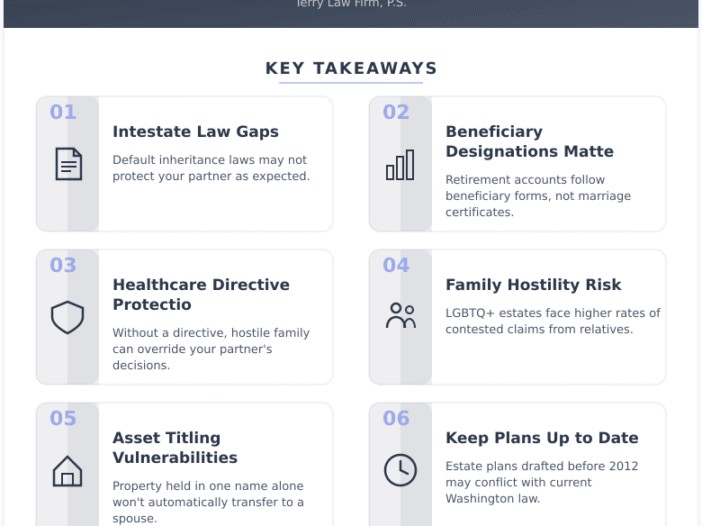
Legal marriage protects LGBTQ+ couples in Washington at a foundational level – but it doesn’t automatically transfer assets, protect a partner’s medical decision-making role, or prevent family members from contesting an estate. Washington’s community property laws and its state estate tax threshold (set below the federal limit in 2026) create specific planning needs that only proper legal documents can address. Key documents include a revocable living trust, healthcare directive, durable power of attorney, and updated beneficiary designations on all financial accounts. Couples with estate plans drafted before 2012 or 2015 should review them for outdated language. Terry Law Firm, P.S. in Sumner, WA helps LGBTQ+ couples throughout Pierce and King County close these gaps with a complete, tailored estate plan.
State Reform Movements: Florida’s Crackdown on Advertiser Lawyers
Every state shapes personal injury law a little differently, but in 2025 Florida has taken center stage. Lawmakers there have passed new rules targeting heavy advertising by personal injury lawyers, aiming to limit what many see as misleading or aggressive marketing practices. The reforms have sparked national debate and could influence how injury law evolves […]