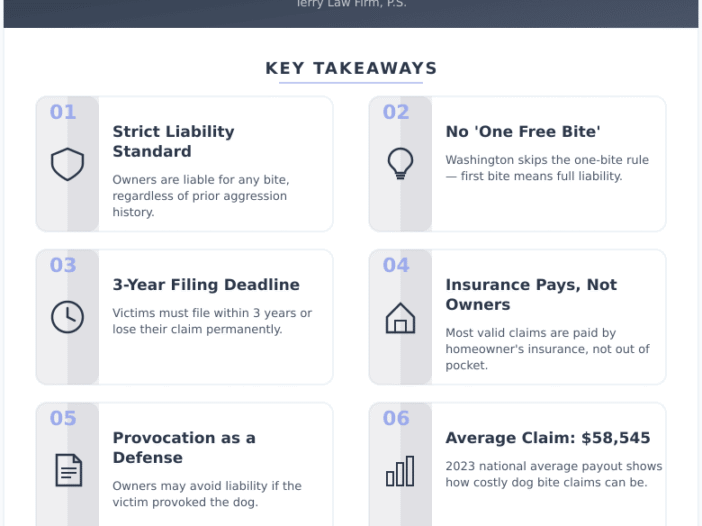
Washington State holds dog owners strictly liable for bites under RCW 16.08.040, meaning no prior history of aggression is required to pursue a claim. Many owners wrongly believe the ‘one free bite’ rule applies here – it does not. Victims, on the other hand, often accept low early settlements, miss the three-year filing deadline, or fail to report the bite to animal control. This piece breaks down how strict liability works in Washington compared to neighboring states like Oregon and Idaho, what damages bite victims can recover, and the exact steps to take immediately after an incident. Whether you’re an owner navigating your legal exposure or a victim trying to understand your rights, the law is more nuanced than most people expect – and getting informed early makes a measurable difference in how your situation resolves.
Blog
I Inherited an IRA – Now What? The 10-Year Rule That’s Costing Families Thousands
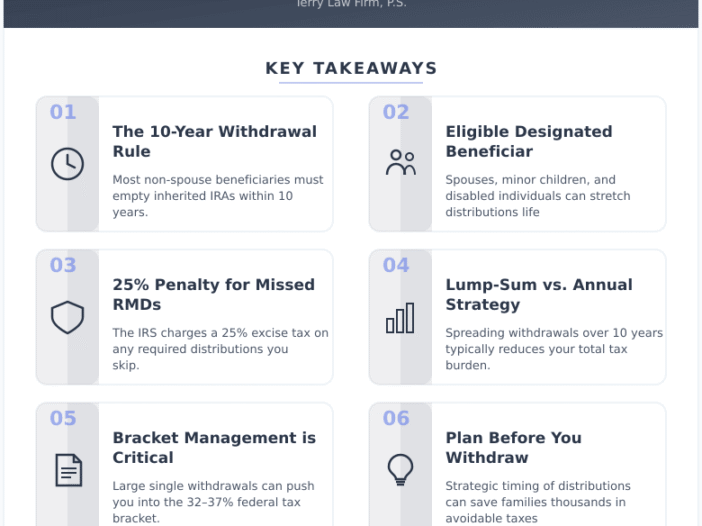
Inheriting an IRA triggers federal tax rules that catch most families off guard. The 10-year rule, introduced by the SECURE Act, requires most non-spouse beneficiaries to fully withdraw inherited IRA funds within a decade – and depending on when the original owner started taking distributions, annual withdrawals may also be required along the way. Missing these deadlines carries a 25% IRS excise tax penalty. Washington State residents have a meaningful advantage: no state income tax, meaning distributions are only taxed at the federal level. Smart distribution planning – spreading withdrawals across low-income years rather than taking a lump sum – can save families thousands. This guide covers who qualifies for the 10-year rule, how traditional and Roth inherited IRAs differ, Washington-specific tax context, and the most common mistakes beneficiaries make before speaking with a legal or tax professional.
The Rise of Settlement Culture — 95% of Cases Avoid Trial Now
Most people imagine a personal injury case playing out like a courtroom drama—lawyers pacing the floor, witnesses on the stand, a jury deliberating. The reality in 2025 looks very different. Today, about 95% of personal injury cases never make it to trial. They’re resolved through settlements. At Terry Law Firm, P.S., we’ve seen this “settlement […]
Special Needs Trust vs. Pooled Trust vs. ABLE Account: Which One Actually Protects Your Child’s Benefits?
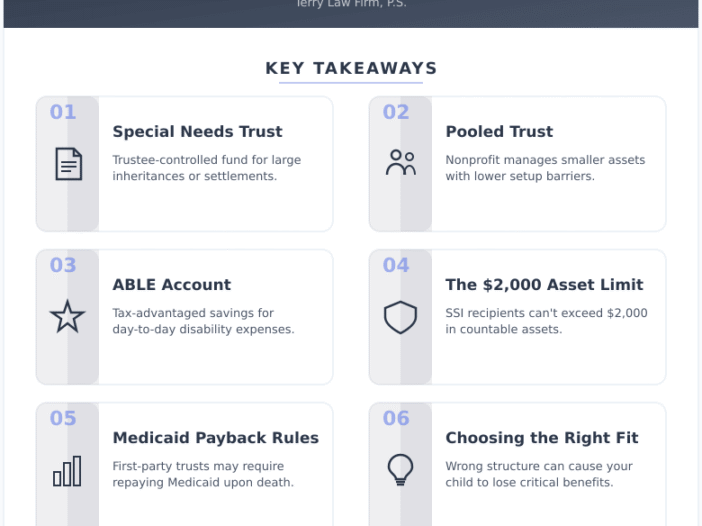
Choosing between a special needs trust, a pooled trust, and an ABLE account is one of the most consequential decisions a parent of a child with disabilities can make. Each tool protects government benefits differently, and selecting the wrong one can trigger benefit loss or costly Medicaid payback requirements. A third-party special needs trust works best for larger inheritances with no Medicaid payback concern, while a pooled trust offers professional management for families without a qualified individual trustee. ABLE accounts complement both by handling routine supplemental expenses with direct account access. Washington families benefit from the state’s lack of income tax and have access to the WA ABLE savings plan. The right structure depends on the source and size of the funds, available trustees, and the beneficiary’s ongoing needs. Combining tools – like pairing a trust with an ABLE account – is often the most effective approach.
Utah Residents Who Die Without a Will Hand Control of Everything to the State – Here’s What That Actually Looks Like
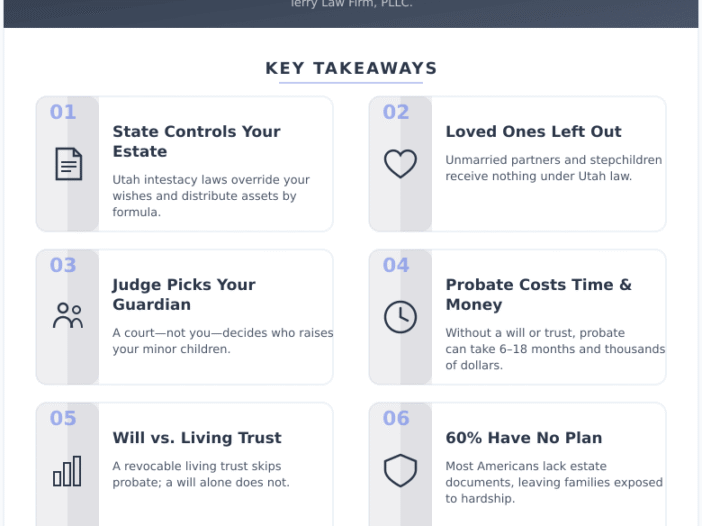
Dying without a will in Utah triggers a rigid state formula called intestate succession that distributes your assets with no input from you. Unmarried partners receive nothing. Stepchildren may be excluded. A judge, not you, appoints a guardian for your minor children. And a will alone does not avoid probate – it actually guarantees it. A properly funded revocable living trust is the most effective way to keep your estate out of court, protect blended family relationships, and ensure your wishes are followed. This piece walks through exactly how Utah’s intestacy laws work, compares wills versus trusts with real cost data, and gives Utah families a clear step-by-step action plan to get their estate in order in 2025 before it becomes their family’s problem.
5 Things Pierce County Drivers Do After a Crash That Wreck Their Injury Claim
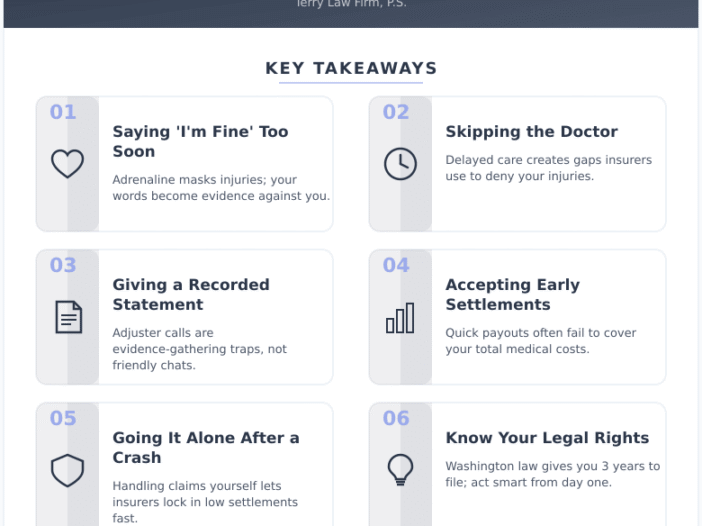
After a car crash in Pierce County, the decisions made in the first 24 to 72 hours often determine whether an injury claim succeeds or falls apart. Five mistakes consistently damage claims before they ever reach settlement: saying you feel fine at the scene before symptoms appear, delaying medical care and creating gaps in your treatment record, giving recorded statements to the opposing insurer without understanding how those statements are used, posting on social media while a claim is open, and signing a release before the full scope of injuries is known. Washington’s pure comparative fault rule and three-year statute of limitations create specific legal context that affects how these mistakes play out. Knowing what to do right after impact, including what to say, what to document, and what not to sign, gives injury victims in communities like Tacoma, Puyallup, Sumner, and Lakewood the best chance of recovering fair compensation.